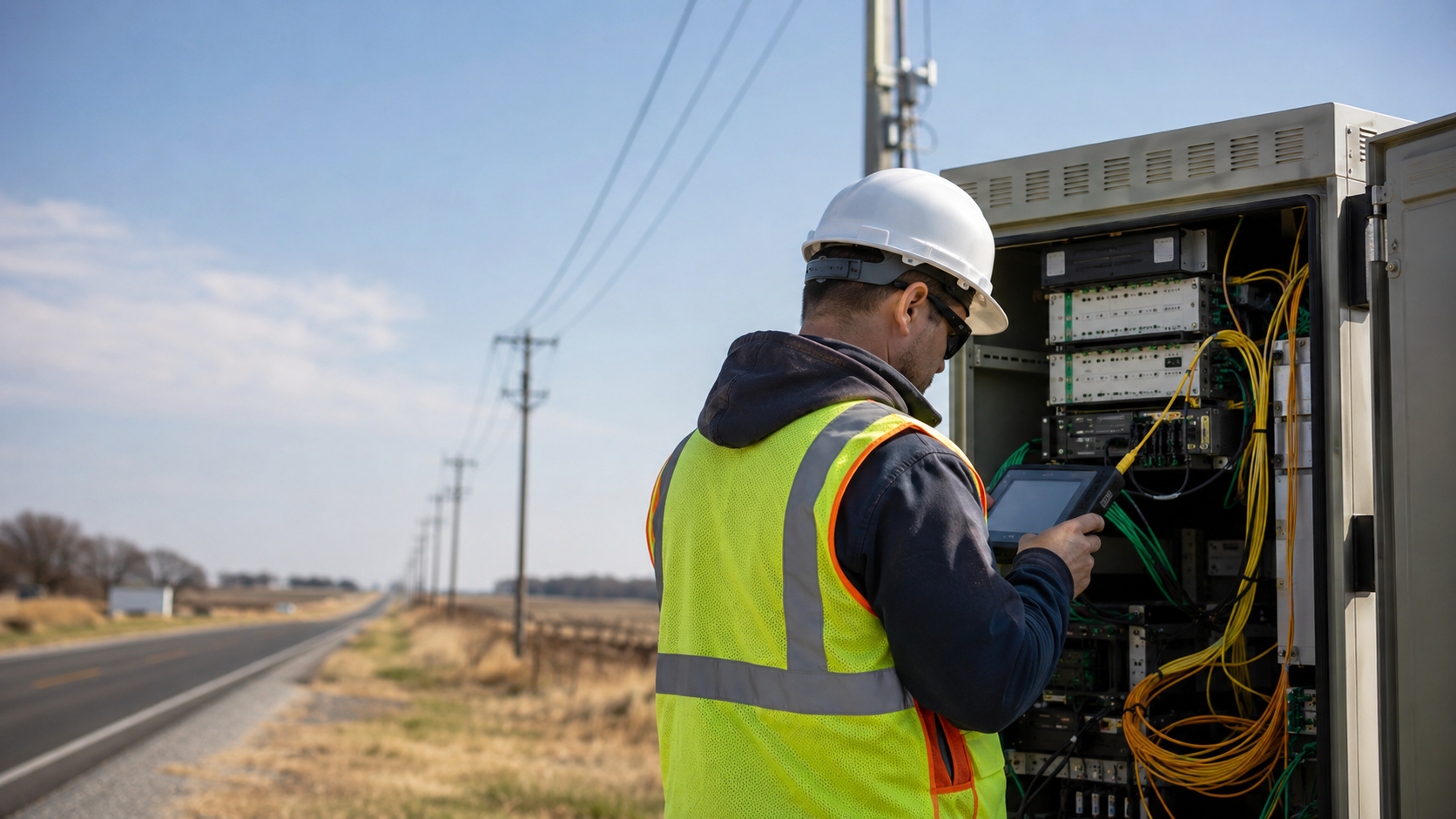

Advanced manufacturing plants in Ohio, Texas, and Michigan are running automated production lines staffed by workers who were trained for an earlier era of industrial work. State workforce boards are fielding calls from employers who cannot fill roles in programmable logic controllers, data-monitored maintenance, and network-connected equipment.
Trade schools and community colleges are positioned to close that gap, but only if their programs match what Industry 4.0 roles actually require. Platforms like Flashpass already work with trade schools and government agencies to stand up certification programs in high-demand fields, including cybersecurity, AI, data analytics, and energy, without the two-year development timelines that make traditional programs too slow to matter.
Keep reading to learn how to identify the right credential pathways for your region, structure a program that satisfies both employers and funders, build employer partnerships that keep your curriculum current, and access the federal and state funding streams that support this kind of training.
Why Advanced Manufacturing Needs New Training Models
The World Economic Forum estimates that 40 percent of core skills in manufacturing and supply chain will change within the next three to five years. That is not a distant forecast; it is a planning mandate for every trade school with a welding or machining program today.
How Automation Is Changing Trade and Technician Roles
Automation is not eliminating trade roles outright. It is layering digital skills on top of physical ones. A CNC machinist now reads sensor dashboards. An electrical technician configures network-connected safety systems. A maintenance technician pulls production data to predict equipment failure before it happens.
These roles still require hands-on trade competency. They also require workers who can interpret data outputs, follow cybersecurity protocols on connected equipment, and apply basic AI-assisted diagnostics. Most workers currently in these roles were never trained for that layer.
Your existing program graduates may be job-ready for the equipment they learned on. They may not be ready for the version of that equipment that ships with a sensor array and a cloud dashboard. Short-form reskilling credentials fill that gap faster than any full program redesign.
Where Skills Gaps Show Up First in Local Workforce Systems
Skills gaps tend to surface in employer feedback before they show up in labor market data. Workforce boards in manufacturing-heavy counties often hear the same pattern: companies are promoting from within but struggling to find workers who can handle the digital components of advanced roles.
The sectors where this pressure is most visible right now include oil and gas, broadband infrastructure, electrical engineering, and automated production environments. Each of these fields is adding digital and data functions faster than traditional training pipelines can respond.
Your regional labor market intelligence, combined with direct employer feedback, should drive which credential areas you prioritize. Understanding where the gap is sharpest in your service area sets up the next step: designing training that actually meets that demand.
What Strong Workforce Training Looks Like in Industrial Settings
Effective reskilling programs for Industry 4.0 jobs are built around short, stackable credentials that workers can earn without leaving employment. A well-designed program gets a worker from enrollment to a recognized credential in weeks, not semesters.
Short-Form Credentials vs Traditional Program Timelines
Traditional two-year programs work well for initial career entry. They do not work for incumbent workers who need one specific skill set upgraded. That is where microcredentials and short-form certification tracks deliver clear advantages.
Short-form credentials work best when they are tied to specific job tasks and recognized by employers in your region. An oil and gas technician earning a data analytics credential needs that credential to be legible to their employer, not just listed on a transcript.
Hands-On Delivery for Digitally Integrated Job Tasks
Industrial reskilling programs that stay entirely classroom-based tend to underperform. Workers in manufacturing, broadband, and electrical engineering roles retain more when training mirrors their actual work environment.
The most effective programs film instructional content on real worksites, feature working tradespeople as instructors or demonstrators, and tie assessments to realistic job scenarios. A cybersecurity module for industrial systems should walk learners through an actual OT network setup, not just describe it in a slide deck.
Your delivery model matters as much as your curriculum content. Workers who complete hands-on, scenario-based training are more likely to apply those skills immediately on the job, which is exactly what funders and employers want to see when you report outcomes. That connection between delivery quality and measurable placement results becomes central as you build out your credential pathways.
Certification Paths That Match Employer Demand
Employers in advanced manufacturing, energy, and infrastructure consistently cite three skill areas as hardest to hire for: industrial cybersecurity, data analytics, and AI literacy for technical roles. Building certification paths in each of these areas positions your school directly against regional demand.
Cybersecurity for Industrial Systems
Operational technology networks in manufacturing, oil and gas, and broadband infrastructure are increasingly targeted by cybersecurity threats. Employers need workers who understand the basics of securing connected industrial equipment, not just enterprise IT systems.
A cybersecurity certification track for industrial settings should cover:
- Network fundamentals specific to OT and ICS environments
- Basic threat identification and incident response protocols
- Secure configuration of connected equipment and sensors
- Compliance requirements relevant to energy and infrastructure sectors
This credential is stackable. A worker earning a cybersecurity microcredential can later add a data analytics track or pursue a longer certification path. Stackability matters to funders because it demonstrates a continuing education pipeline rather than a one-time training event.
Data Analytics for Production and Maintenance Teams
Production environments now generate more data than most frontline workers know how to use. Maintenance teams that can read predictive analytics dashboards catch equipment failures earlier. Production leads who understand yield data make faster decisions.
A data analytics certification designed for industrial technicians does not need to cover advanced statistics or machine learning. It should cover data interpretation, basic visualization tools, and how to act on the numbers a production system already generates. That framing makes the credential accessible to workers without a technology background and immediately applicable on the floor.
AI Literacy for Frontline Technical Roles
AI tools are arriving on production floors faster than most training programs anticipated. Workers are being handed AI-assisted diagnostic tools, scheduling systems, and quality control platforms without any training on how to use them.
An AI literacy credential for frontline industrial workers covers how AI tools make recommendations, when to trust those outputs, and when to flag them for review. This is not a programming credential. It is a practical, job-ready certification that prepares workers to work alongside AI-assisted systems rather than around them.
These three credential areas, cybersecurity, data analytics, and AI literacy, form a natural certification ladder for workers moving into advanced industrial roles. With that foundation in place, the next challenge is building the employer relationships that keep those credentials current and regionally relevant.
How Institutions Can Build Employer-Aligned Partnerships
Employer partnerships are the structural difference between a training program that fills seats and one that places graduates. A formal co-design relationship with manufacturers or workforce boards produces credentials that employers already recognize before your first cohort graduates.
Co-Designing Curriculum With Manufacturers and Workforce Boards
Many states fund curriculum co-design projects through workforce development agencies. These projects bring together trade schools, regional manufacturers, and workforce boards to identify skill gaps and build training responses to them.
Your role in a co-design process is to translate employer skill requirements into structured learning outcomes. That means sitting in on plant tours, reviewing job task analyses, and mapping what workers actually do against what your current curriculum covers. Workforce boards can facilitate these conversations and sometimes fund the planning work directly.
Co-designed credentials also carry more weight in grant applications. When a funder sees that your cybersecurity or oil and gas certification was developed with named regional employers, that is documentation of demand, not just intent.
Using Placement Data and Employer Feedback to Improve Programs
Placement rates and employer satisfaction scores are now standard reporting requirements for most workforce development grants. Collect both from the start, even before a funder requires it.
Build a feedback loop into your program design. Survey employers 90 days after a graduate starts work. Ask whether the credential prepared the worker for their specific role. That data gives you a basis for curriculum updates and a credible story for your next funding renewal. It also signals to employers that you treat the partnership as ongoing rather than transactional.
Programs that track enrollments, completions, placements, and employer feedback are consistently better positioned for funding renewals. That outcome-tracking infrastructure connects directly to how you structure your funding strategy.
Funding Routes for Launching and Expanding Training
The U.S. Department of Labor has distributed funds specifically for industry-driven skills training, including a $30 million grant program targeting employer-workforce board-institution partnerships. That is real money accessible to trade schools that can demonstrate regional employer demand and measurable outcomes.
How Perkins V and WIOA Support Credential-Based Programs
Perkins V funds career and technical education programs at secondary and postsecondary levels. It supports program improvement, equipment purchases, curriculum development, and work-based learning. Many states allow Perkins funds to support short-form credentials when those credentials align with high-skill, high-wage, or high-demand occupations.
WIOA funds go through local workforce development boards and can support training for both dislocated workers and adults seeking new employment. Some WIOA-funded programs cover the full cost of training for eligible participants, making your program accessible to workers who cannot afford out-of-pocket tuition.
Key eligibility factors to confirm before applying:
- The credential must appear on your state's Eligible Training Provider List (ETPL)
- Programs must demonstrate labor market alignment with regional employer data
- Outcome reporting is mandatory, including credential attainment and employment placement
- Some states require employer co-investment for WIOA-funded incumbent worker training
When Third-Party Certification Partners Strengthen Grant Applications
Grant reviewers look for proof that your program will produce recognized, portable credentials. A credential co-developed with employers in the field and delivered through a recognized platform carries more weight than one built entirely in-house.
Third-party certification partners can provide curriculum that is already employer-informed, delivery infrastructure that scales without large internal IT investments, and outcome documentation that meets state reporting standards. For a trade school with limited staff capacity, this reduces the administrative burden of building a fundable program from scratch.
Perkins V in particular rewards programs that demonstrate industry credential alignment. If your data analytics or cybersecurity credential maps to a recognized national or industry standard, document that connection clearly in your application. That specificity is often the difference between a fundable proposal and one that misses the mark.
Planning the Next Program Move
Before you launch a new cohort in any Industry 4.0 credential area, a short planning checklist prevents the most common program design mistakes.
Questions to Ask Before You Launch a New Cohort
Starting without answers to these questions creates problems at the enrollment, delivery, and reporting stages:
- Which specific job titles are you training workers to enter or advance into?
- Which employers in your region have confirmed demand for this credential?
- Is your credential on your state's ETPL, or do you need to apply for that status?
- What is your enrollment target, and how will you reach that audience?
- How will you collect and report placement data at 30, 60, and 90 days post-completion?
- Does your curriculum reflect how the job is actually performed, including digital and data components?
These questions also double as a self-assessment before you engage a certification partner. A partner who asks you the same questions is one worth working with.
What to Look for in a Scalable Certification Partner
Scalability matters when your goal is to grow from a pilot cohort to a sustained program. A partner who supports a 20-person cohort but cannot handle 200 creates a ceiling on your program's impact and your funding potential.
Evaluate certification partners on four dimensions: credential recognition (do employers in your sector accept it), curriculum quality (was it built with industry input and filmed in real work environments), delivery infrastructure (does it run under your brand without heavy IT setup), and outcome reporting (does it generate the data your funders require).
Ohio's MCCTC used a structured partnership model to expand into oil and gas and access state grant revenue through Ohio's IMAP initiative, reaching 1,500 students in year one. That kind of scale is achievable when your platform handles credential delivery, enrollment, and reporting rather than requiring your staff to manage each piece separately.
Frequently Asked Questions
Which Industry 4.0 Roles Can I Qualify for After a Short Reskilling Track in Manufacturing, Oil and Gas, or Broadband?
Short reskilling credentials in cybersecurity, data analytics, and AI literacy prepare workers for roles such as industrial control systems technicians, broadband field technicians, production data analysts, and OT network security specialists.
Oil and gas programs specifically prepare workers for smart monitoring and data-driven maintenance roles on connected well sites and pipelines. Credential area and regional employer demand both shape which specific titles are most accessible in your market.
What Core Skills Should a Beginner Build First for Automation, Data Analytics, and Cybersecurity Roles?
Start with foundational digital literacy, including how networked equipment communicates and how data moves through an industrial system. From that base, branching into data interpretation for automation or network security basics for cybersecurity makes the most sense for workers entering these fields. Building those skills in sequence, rather than all at once, is what short-form stackable credentials are designed to support.
Where Can I Find Online Programs That Lead to Recognized Credentials Employers Actually Accept?
Programs with credentials recognized by employers are typically co-developed with industry partners and listed on your state's Eligible Training Provider List. Look for programs where working tradespeople contribute to instructional content and where the credential maps to a specific job task rather than a broad subject area. Regional workforce boards often maintain lists of approved providers and can confirm which credentials local employers have specifically requested.
How Do Free or Grant-Funded Training Options Work, and What Paperwork Should I Plan for?
WIOA-funded training covers costs for eligible dislocated workers and adults, but enrollment requires an intake process through your local American Job Center. Perkins V funds flow to institutions rather than individuals, so the school applies for program funding and then delivers training to students.
Both funding streams require outcome reporting, including credential attainment and employment placement, so building that data collection process before your first cohort starts will save significant administrative work later.
What Does a Typical Timeline and Weekly Workload Look Like for Working Adults in a Reskilling Cohort?
Most short-form reskilling credentials in industrial fields run four to twelve weeks and require six to ten hours of weekly engagement. Programs designed for incumbent workers typically offer evening and weekend access so participants do not need to leave their current jobs. Assessments are scenario-based rather than exam-heavy, which keeps the workload practical and directly connected to what workers will do on the job.
What Salary Ranges Are Common for Entry-Level and Mid-Level Industry 4.0 Specialists by Region?
Salary ranges vary significantly by region, credential type, and employer. Entry-level roles in industrial cybersecurity and data-monitored maintenance tend to start at wages above the median for traditional trade roles, particularly in manufacturing-heavy Midwest and Gulf Coast markets.
Mid-level specialists with stacked credentials in areas like cybersecurity and data analytics see additional wage gains. Your state labor market information office publishes occupation-specific wage data by county, which is the most reliable source for building the labor market justification section of a grant application.
Build Your Program Before the Next Grant Cycle Opens
The funding is real, the employer demand is documented, and the credential pathways in cybersecurity, data analytics, AI literacy, oil and gas, and broadband are ready to deploy. What closes the gap between intent and launch is a clear program structure, a funding route that fits your institution's eligibility, and a delivery model that produces the outcome data your funders need to see.
If you are scoping a new cohort, responding to a state workforce mandate, or building the case for a Perkins V or WIOA-aligned program, the planning work starts with a clear picture of what your institution can deliver and what a partner needs to handle.
Book a demo and see how Flashpass delivers industry-recognized certifications at the scale your program requires.